About All Tours From Marrakech ToursQuad Biking ToursPrivate ToursOvernight Stay ToursCamel Ride ToursSunset ToursLuxury Tours Directions Hours & Fees
Find Tours 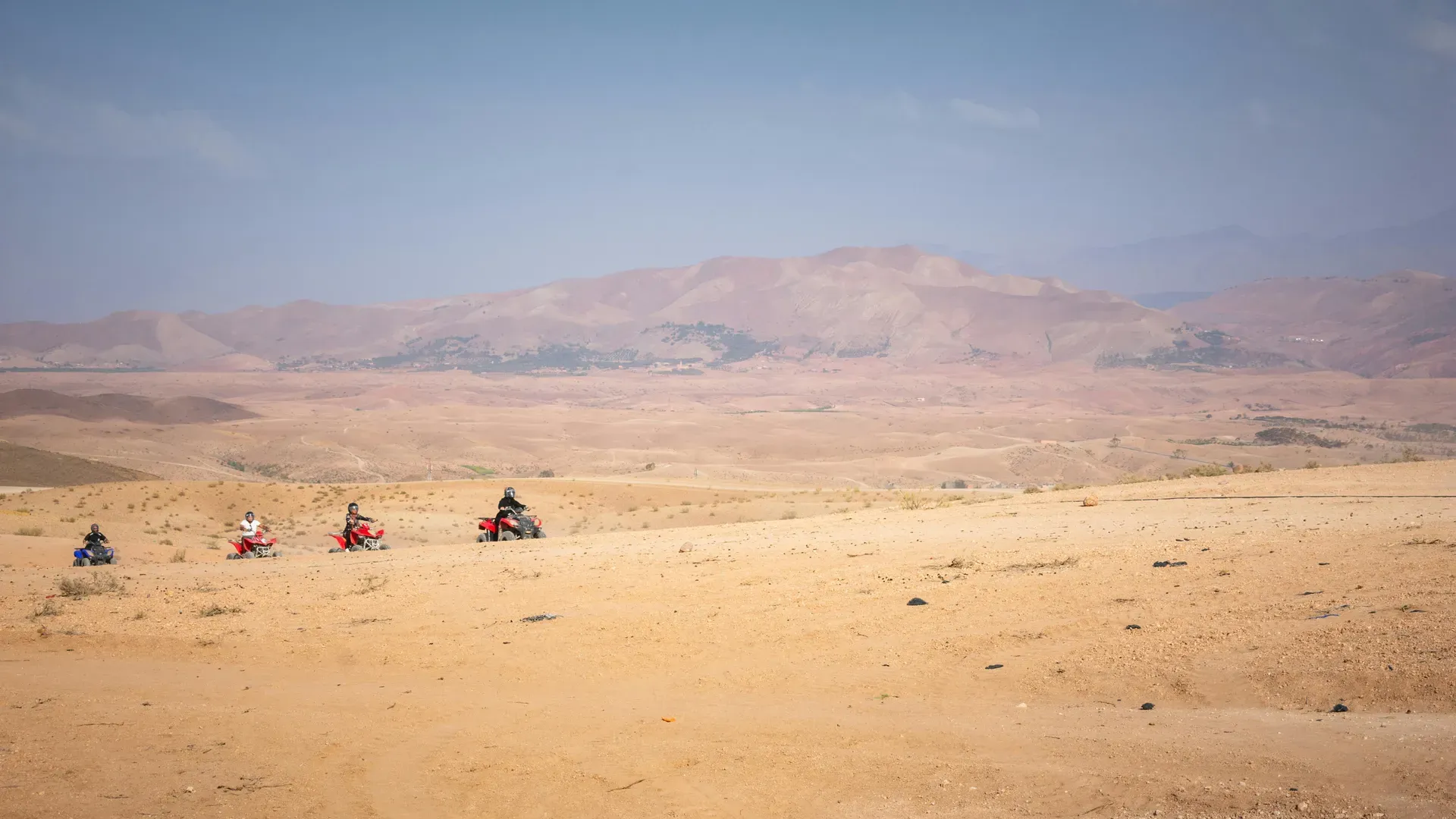
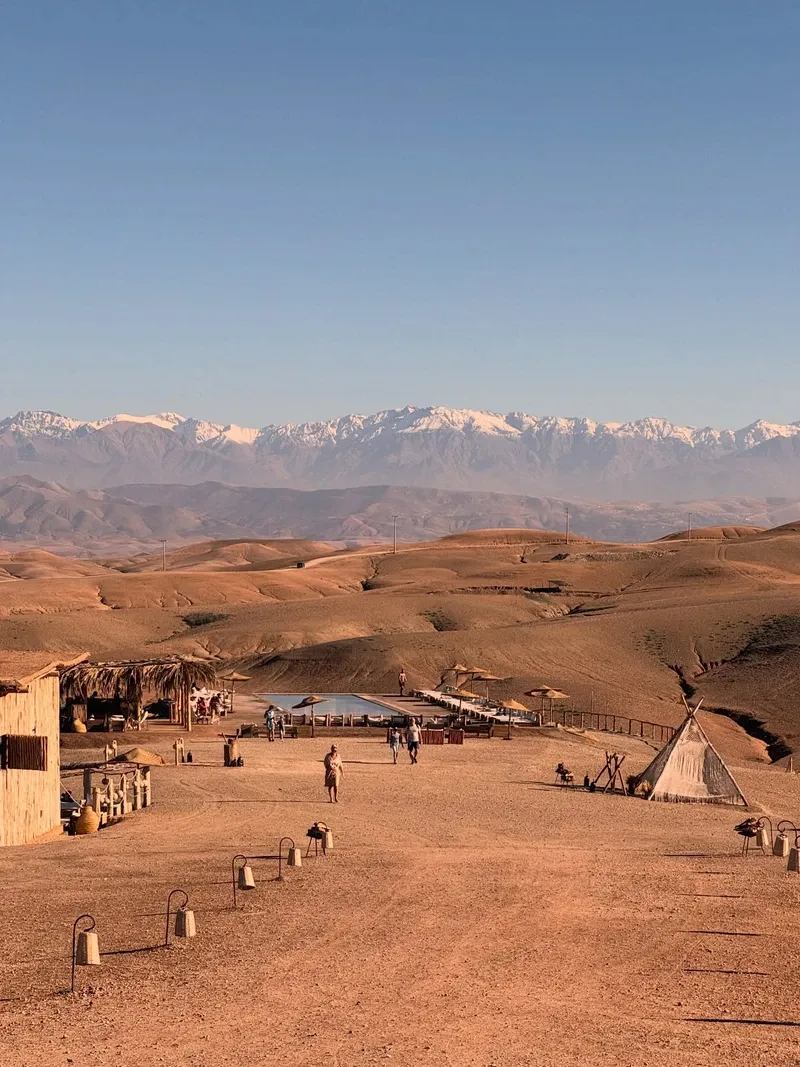
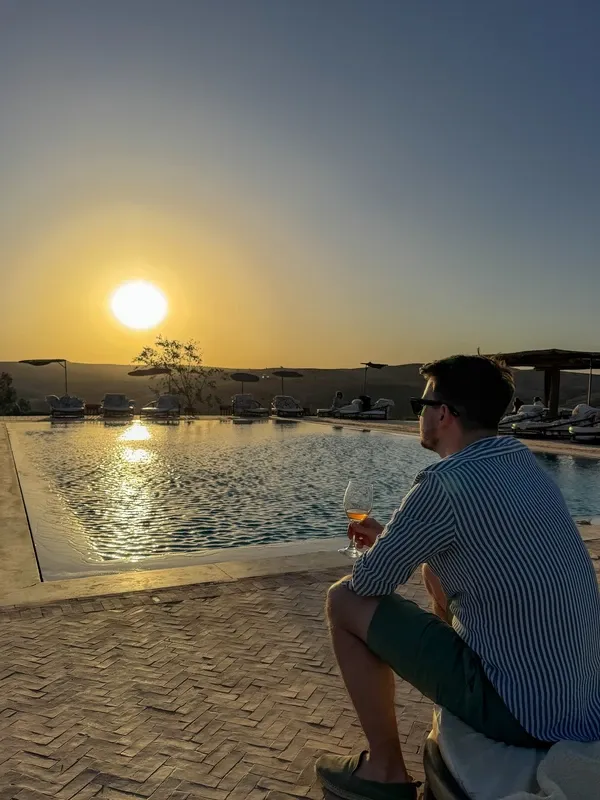
The Agafay Desert is a 400-square-kilometer expanse of ochre stone plateaus located just 45 minutes from Marrakech. Trade the city noise for one of over 70 luxury camps, where you can watch the sun set against the snow-capped peaks of the High Atlas Mountains.
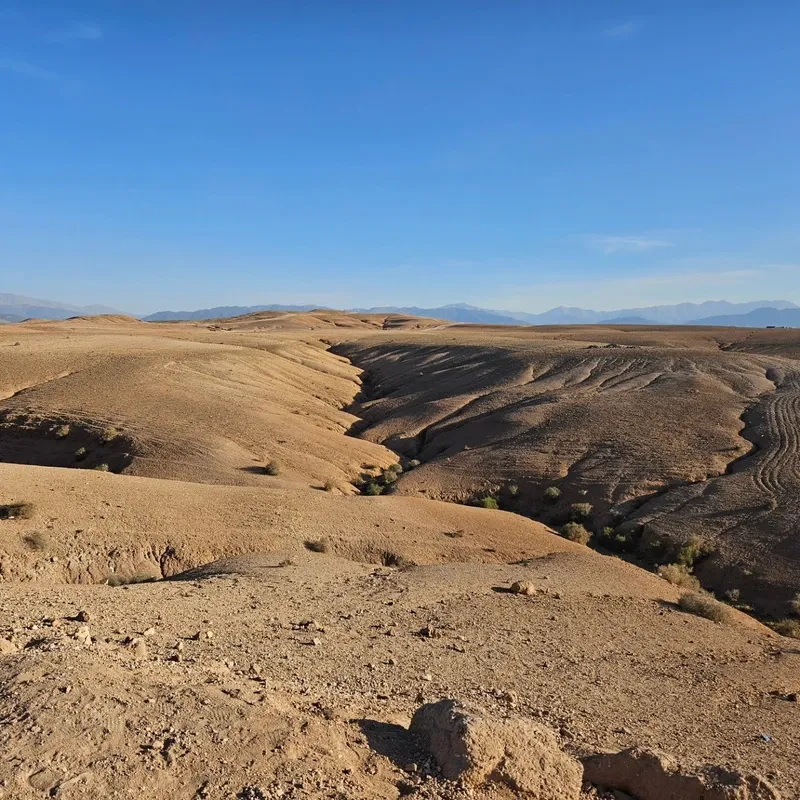
Find Guided ToursThe Agafay Desert is a barren stone desert, or 'reg', located 30 to 40 kilometers from Marrakech in the foothills of the High Atlas Mountains. Covering an area of 180 to 400 square kilometers, it sits at an elevation of 600 to 700 meters. Unlike the sandy expanses of the Sahara, Agafay is a 'hamada', a high rocky plateau where wind has stripped away the loose sand. The resulting landscape features undulating rocky plateaus, white and ochre hills, and dry riverbeds composed of marl and volcanic sediments.
Geologically, this lunar-like terrain was once a prehistoric lake. It dried up thousands of years ago, leaving behind a mineral-rich basin of clay and stone that receives an average of just 120 millimeters of rainfall per year. For centuries, nomadic Berber communities utilized the harsh environment, arriving after winter storms to graze sheep and goats during brief grass cycles.
The desert's stark stone plains stand in sharp visual contrast to the snow-capped peaks of the nearby High Atlas Mountains. Within this arid expanse lies the Enchanted Oasis, a seven-hectare valley of eucalyptus and olive trees sustained by a local wadi. This rare patch of greenery provides a distinct ecological shift from the surrounding rock and clay.
Agafay has recently transitioned from a quiet grazing ground to a major center for eco-tourism and luxury glamping. Development accelerated in the early 2010s as travelers sought accessible desert environments without the 8 to 10 hour drive required to reach the sand dunes of Merzouga or Zagora. Today, it hosts over 70 active camps, providing an immediate, firm-ground alternative to the urban environment of Marrakech.
Discover the full history and cultural significance on our About page.
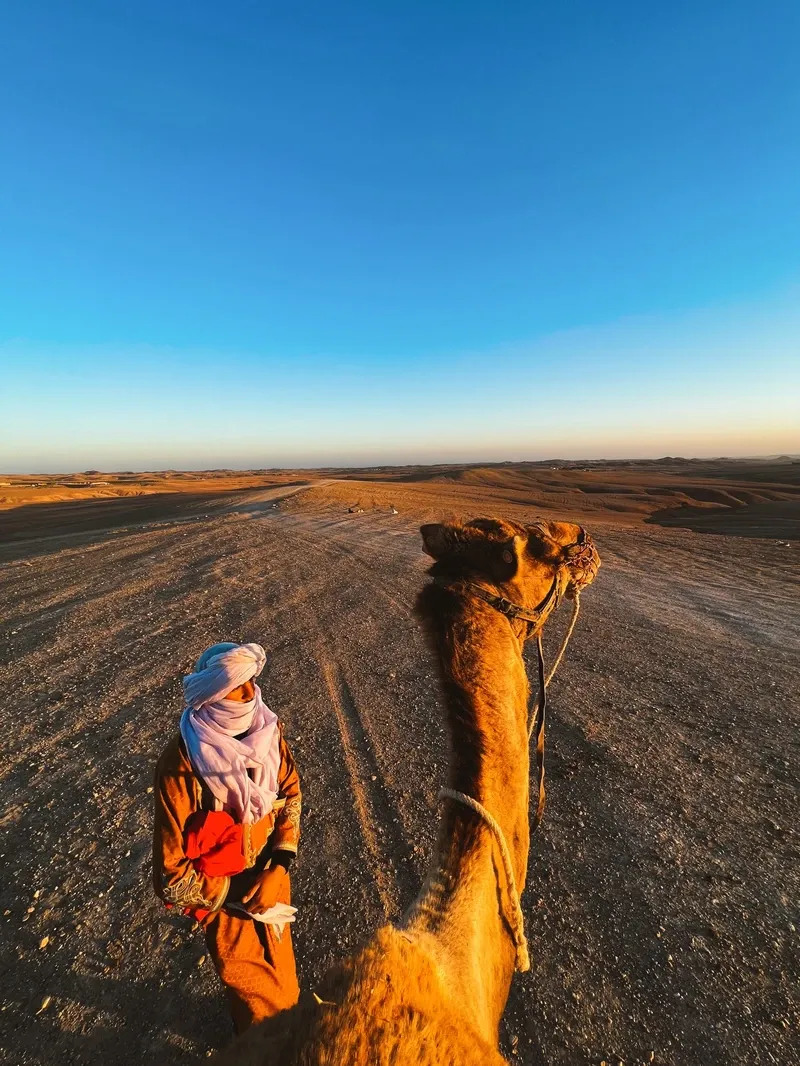
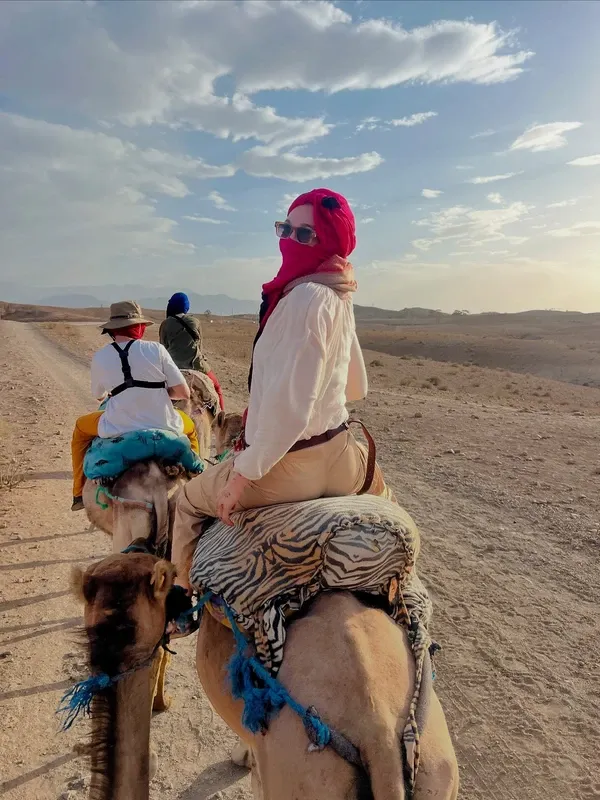
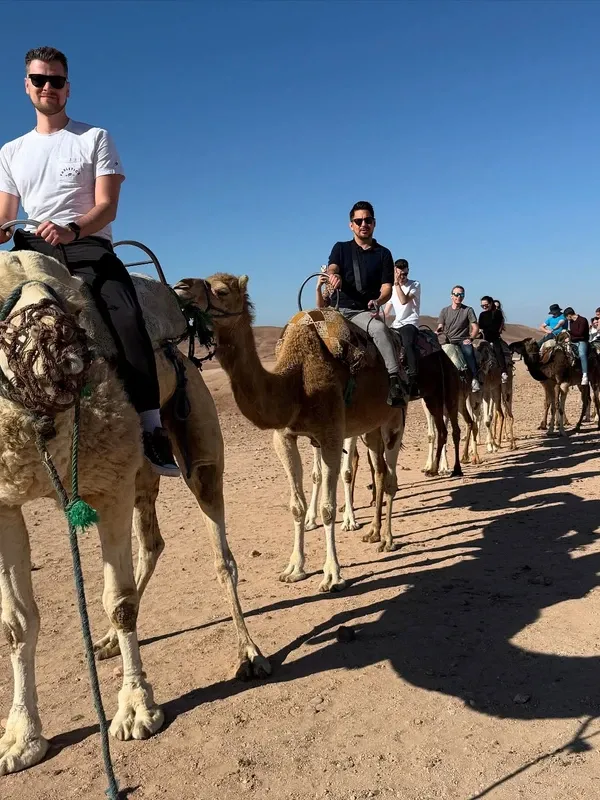
Ride a camel for 60 minutes across the firm, rocky plateaus of the Agafay. As the sky shifts to pink and gold over the snow-capped High Atlas Mountains, this traditional transport provides a slow-paced perspective of the arid landscape. Wear long pants to prevent chafing from the saddle.
Spend the night in one of the 70-plus active camps scattered across the 400-square-kilometer stone desert. Accommodations feature high-end Berber-style tents equipped with king-size beds, ensuite bathrooms, and private decks. Nighttime temperatures can drop by 15°C, making the provided fire pits and heavy blankets essential.
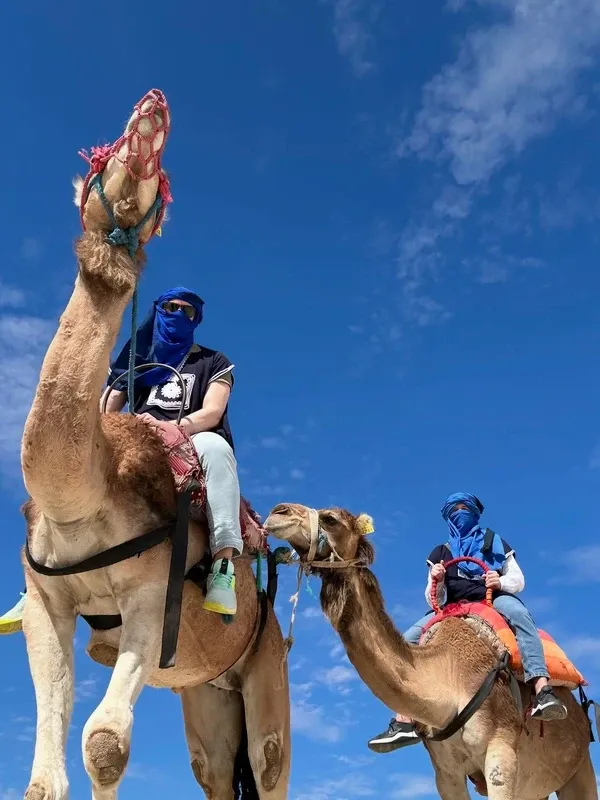
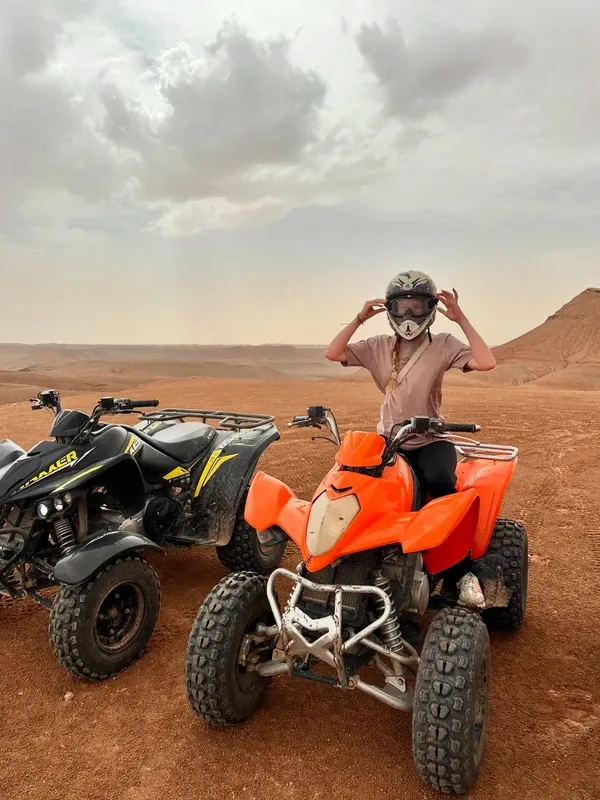
Navigate the firm marl and volcanic sediments on a high-speed ATV or buggy tour. The route covers dry riverbeds and steep rocky hills, highlighting the lunar-like geography of this prehistoric lake basin. Pack a traditional scarf to protect your face from the dust kicked up along the unpaved tracks.
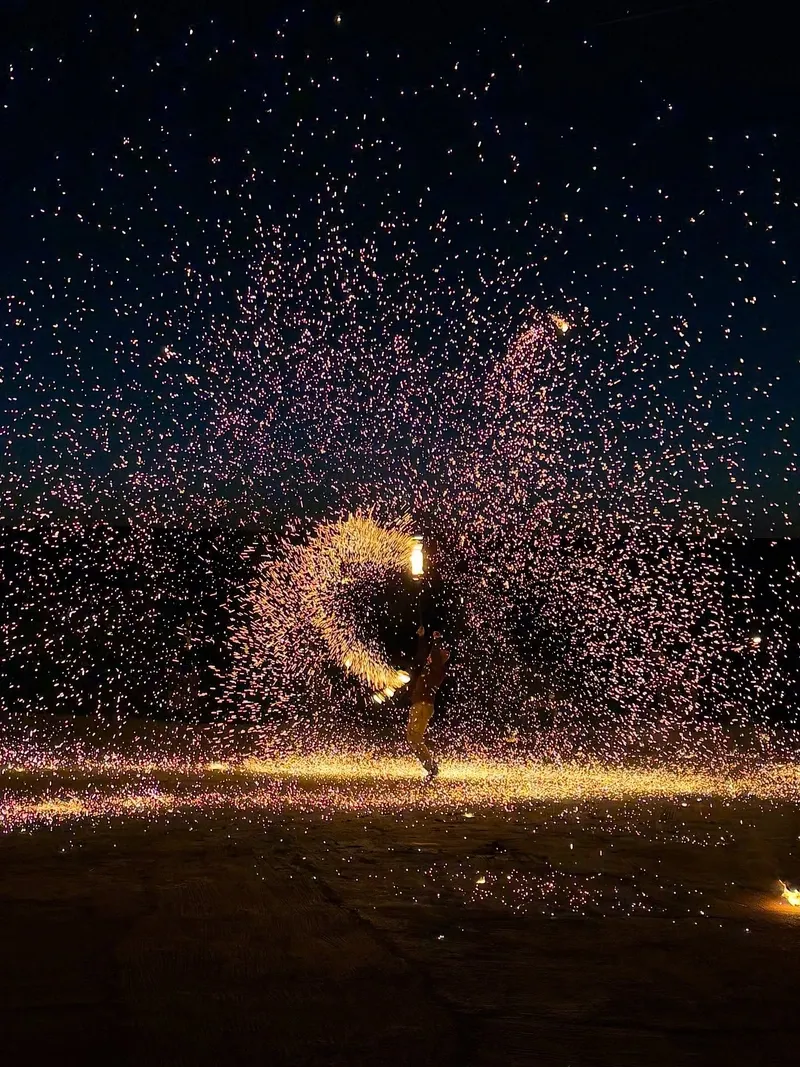
A nearby wadi sustains a seven-hectare area of eucalyptus and olive trees, creating a stark contrast against the barren stone plains. Visitors gather here for multi-course Moroccan feasts featuring tagines and couscous. Meals are served under clear skies with live fire shows and traditional Berber music.
Hand-picked tours with free cancellation and verified reviews
 Free Cancellation
  Free Cancellation 5h 30min
  Free Cancellation 6h 30min
  Free Cancellation
  Free Cancellation 7h
  Free Cancellation 16h
  Free Cancellation 6h
  Free Cancellation 3h
 The optimal times to visit the Agafay Desert are during the spring and autumn months. During these periods, daytime temperatures range from a mild 20°C to 28°C, providing comfortable conditions for outdoor activities and overnight camping.
Daytime temperatures sit between 20°C and 28°C, creating ideal conditions for outdoor exploration and comfortable overnight camping. April is a peak season, meaning camps require booking months in advance.
Extreme heat pushes midday temperatures above 40°C, posing a significant heatstroke risk. Visitors should restrict activities to early mornings or sunset dinners, though nighttime temperatures still drop by 15°C.
Weather conditions mirror spring, with comfortable daytime temperatures from 20°C to 28°C. This is another peak period for overnight glamping, particularly in October, as the severe summer heat subsides.
While daytime conditions remain clear, nighttime temperatures frequently drop below 5°C. Brief winter storms may occur, occasionally bringing short grass cycles to the otherwise barren rocky plateau.
The Agafay Desert geographic area is open 24/7. Individual desert camps and tour operators typically operate between 08:00 and 23:00.
| Category | Price |
|---|---|
| General Admission | Free |
No entry permits are required to access the desert itself. Advance bookings are essential for overnight stays and organized activities at private camps.
For complete schedules and ticket prices, visit our Hours & Fees page.
Reaching the Agafay Desert requires a short 30 to 40-kilometer drive from Marrakech. Visitors can choose between private transfers, rental cars, or local taxis for the 40 to 50-minute transit.
📍 Foothills of the High Atlas Mountains, 30-40 km from Marrakech
Traveling by private transfer provides a highly flexible, door-to-door service directly from the Marrakech city center. You can easily arrange these rides through your hotel or booking platforms like GetYourGuide. This option covers the 35-kilometer distance efficiently. It eliminates the need to negotiate fares or navigate unpaved desert tracks yourself.
You can hire a Grand Taxi from main hubs in Marrakech, such as Bab Doukkala or Jemaa el-Fna. These vehicles cover the 30-kilometer route directly. Since these specific routes are unmetered, you must negotiate and agree upon the fare before departure. Be prepared to pay around 350 MAD for a one-way trip.
Renting a vehicle from the Marrakech airport or city center allows for independent travel. Paved roads cover most of the 30-kilometer route. However, the final one to two kilometers to specific camps consist of bumpy, unpaved tracks. You should download offline maps since mobile signals drop on smaller roads. Avoid driving these poorly lit tracks at night to prevent getting disoriented.
Shared minivans depart from Marrakech and provide a budget-friendly transit alternative for visitors. Operators usually bundle this 30-kilometer ride into a larger group tour package. These packages frequently include activities such as camel riding or a traditional dinner. The transit takes slightly longer due to multiple passenger pickups along the way.
For detailed transport options and routes, visit our Directions page.
Grand taxis from Marrakech to Agafay are unmetered. Always agree on the price before departing, aiming for around 350 MAD for a one-way trip. Since mobile signal drops on smaller tracks, download offline maps to navigate the final unpaved kilometers to your camp.
Temperatures in the desert drop significantly after sunset, often by 15°C. Bring a warm jacket, especially between December and February when nights reach 5°C. Wear long pants to prevent saddle chafing during camel rides. Covering your shoulders and knees also respects local Berber culture.
Agafay is a rocky plateau dominated by marl and volcanic sediments, not a sandy desert. Ignore street touts in Marrakech who promise massive sand dunes. If you want to see 150-meter dunes, you must drive the eight to ten hours to Merzouga or Zagora instead.
The main roads from Marrakech are paved, but the final tracks to the camps are unlit and poorly marked. Do not attempt to drive these routes after dark to avoid getting stuck. Additionally, never park in low-lying dry riverbeds due to the risk of flash floods.
The Agafay plateau gets busy during the peak months of March to May and September to November. Secure reservations two to three months in advance. If you prefer silence, specifically request a camp located far from the main hubs where quad bike noise is concentrated.
While luxury camps might accept credit cards, you need hard currency for the surrounding area. Bring plenty of cash in Moroccan Dirhams to pay for grand taxis, local vendor purchases, and tips. Many drivers and small operators do not have card machines available in the desert.
This massive man-made reservoir provides a sharp blue contrast to the arid stone landscape of Agafay. Visitors can participate in active water sports, including jet skiing, across the expansive surface.
The snow-capped peaks of this mountain range provide extensive hiking opportunities and a stark visual backdrop to the desert. Travelers can also take guided tours through traditional Berber villages.
This area features an entirely different ecosystem defined by heavy greenery and active waterfalls. It serves as a stark environmental contrast to the dry clay and stone of the hamada.
Read what travelers share about their experience visiting Agafay Desert — from practical tips to personal highlights.
No, Agafay is a 'reg' or stone desert characterized by rocky plateaus and clay hills. If you want to see 150-meter sand dunes, you need to travel to Merzouga, which is a 9-hour drive away.
A one-way Grand Taxi typically costs between 250 and 350 MAD, but you must negotiate the fare before departing. Alternatively, a round-trip private transfer costs €50 to €80, while shared minivans are available for around 130 MAD.
Yes, rental cars cost €25 to €40 per day and the main 30-kilometer route from Marrakech is paved. The final 1 to 2 kilometers leading to specific camps consist of unpaved tracks where a 4x4 is helpful but not strictly required in dry weather.
The most comfortable months are March to May and September to November, when daytime temperatures range from 20°C to 28°C. Avoid visiting during the midday heat of June through August, when temperatures routinely exceed 40°C.
Dress modestly by covering your shoulders and knees to respect local Berber culture. Bring long pants for camel rides to prevent saddle chafing, a traditional scarf for dust protection, and a warm jacket since night temperatures can drop by 15°C.
While the natural rocky terrain limits mobility, several luxury locations like Inara Camp provide step-free access, accessible dining areas, and adapted restrooms. Visitors requiring mobility support should arrange private adapted transport from Marrakech.
The geographical area is open 24/7 with no entry fee or permits required, but advance reservations are essential for overnight stays and private camp activities. During the peak months of April and October, you should book your camp at least 2 to 3 months ahead.
You need to carry cash in Moroccan Dirhams (MAD) for taxi fares, tips, and small purchases. Many local drivers and vendors do not accept credit cards, though luxury camps often process payments online for pre-booked stays.
Browse verified tours with free cancellation and instant confirmation.
Find Tours